
When we think about communication, we usually think about television, radio, print, advertising, websites, and social media.
But there is another communication medium that is arguably more consequential inside business, education, government, and institutions:
The presentation.
Presentations are where ideas get explained, challenged, defended, taught, approved, and ultimately acted upon.
Think about a sales meeting. If the customer doesn’t understand or believe the presentation happening in the room, it doesn’t matter how clever the billboard is outside the window.
But if the presentation clearly communicates the idea, builds confidence, and earns the customer’s trust, that billboard suddenly matters a lot less.
That’s why presentations deserve to be managed with the same discipline organizations apply to websites, advertising, documents, and other critical communications.
And although the term Presentation Management sounds modern, the idea behind it is ancient.
Presentation Management Started Long Before PowerPoint
At its core, presentation management is the practice of capturing important knowledge, preserving it, organizing it, and making it available so other people can communicate it consistently.
Humans have been doing this for thousands of years.
Consider prehistoric cave paintings.
Early humans recorded images of animals, hunting, people, and daily life on cave walls. Whatever the exact purpose of an individual painting, the larger principle is remarkable: knowledge could survive the person who originally possessed it.
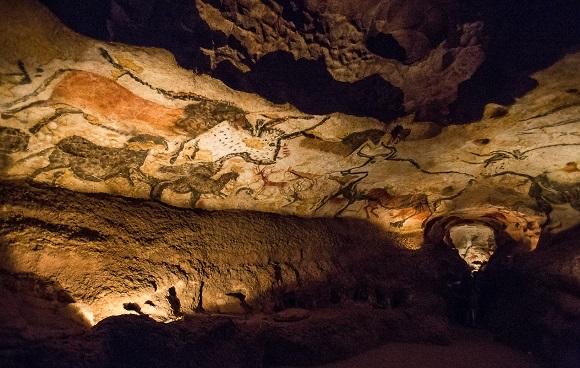
One generation could create a visual message. Another generation could see it, interpret it, and pass the knowledge forward.
The presentation became institutional memory.
Ancient Civilizations Managed Their Messages
The same principle became dramatically more sophisticated as civilizations developed.
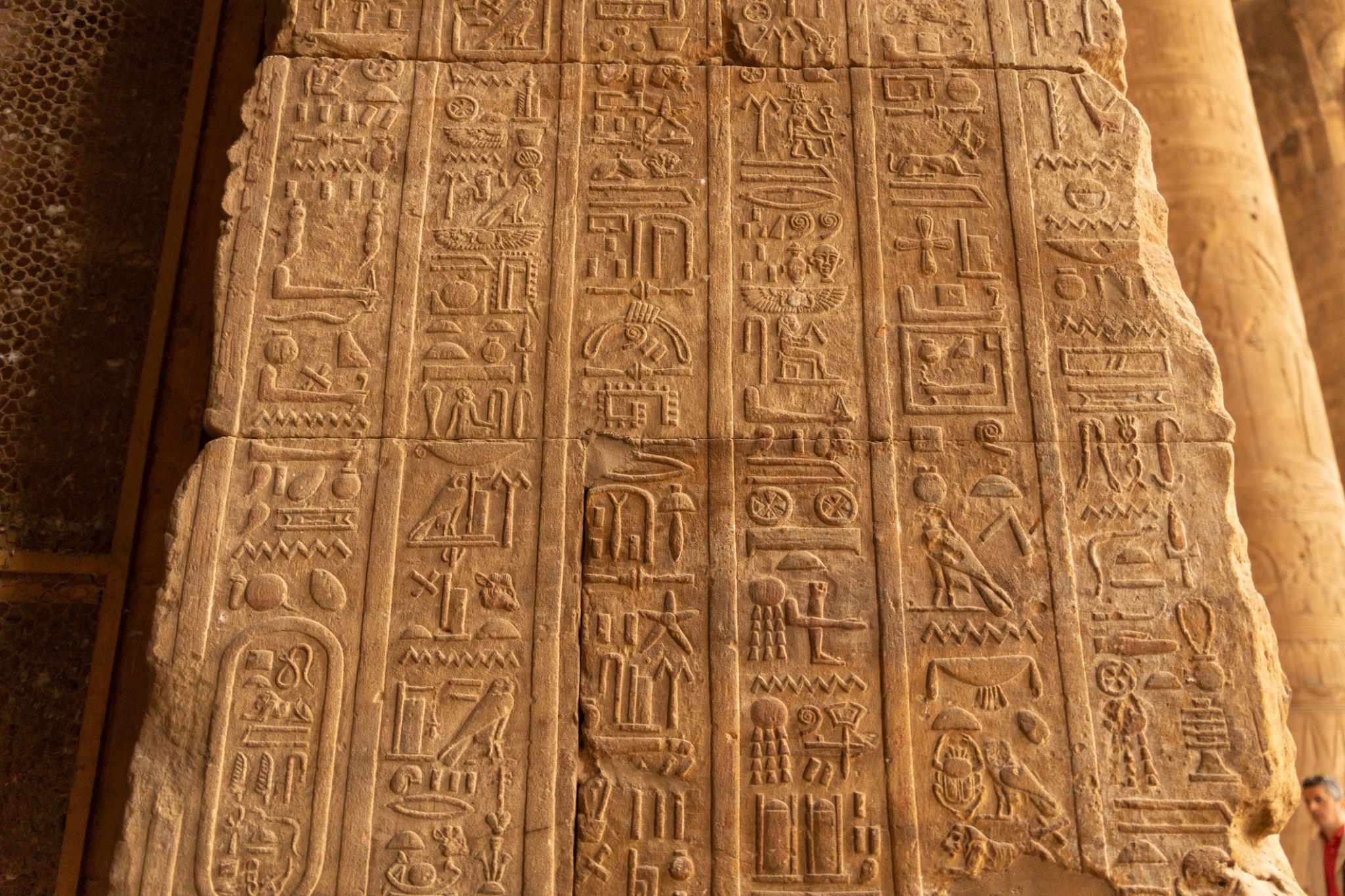
Ancient Egyptians used monuments, tombs, inscriptions, and hieroglyphics to preserve stories, beliefs, accomplishments, rulers, and cultural identity.
The Greeks communicated through temples, sculpture, inscriptions, theater, philosophy, and public speaking.

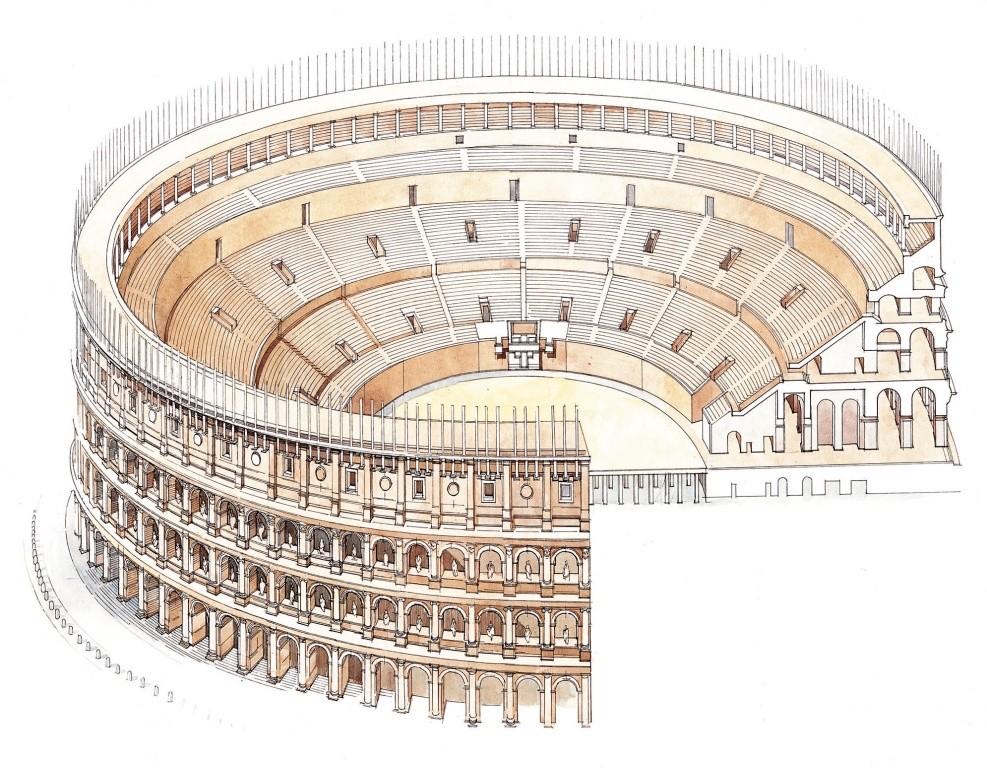
The Romans took communication through architecture to extraordinary levels. Buildings, monuments, roads, forums, and public spaces didn’t simply serve practical purposes. They also communicated the power, values, achievements, and identity of Rome.
Different civilizations. Different technologies. Same fundamental challenge:
How do we preserve an important message and communicate it consistently to people who weren’t there when it was created?
In a very real sense, they were managing presentations.
And they were doing something today’s organizations often struggle to do: creating communications that could outlive the original presenter.
The Presentation Became a Tool for Culture
Religion offers another powerful example.
For centuries, churches and other places of worship have used architecture, paintings, sculpture, symbols, and stained glass to communicate stories and beliefs.
Consider a cathedral filled with stained-glass windows.

Each window communicates part of a larger story. As people move through the building, those individual visual messages form a sequence. Long before digital screens, these visual systems helped communicate complex ideas to populations with widely varying levels of literacy.
In modern terminology, you could almost think of each window as a slide.
The technology changed.
The communication problem didn’t.
From the Chalkboard to the Digital Screen
The same pattern appears in education.
Universities organized learning around professors, lecture halls, podiums, chalkboards, and eventually projection screens.
The instructor speaks, but the visual material supports, reinforces, and preserves the message.
The chalkboard became the overhead projector.
The overhead projector became PowerPoint.
PowerPoint became the digital screen.
And now those presentations live across laptops, servers, SharePoint, Teams, cloud storage, email attachments, and countless folders throughout an organization.
Humanity solved the problem of creating presentations.
Then we created an entirely new problem:
We created far too many of them.
The Modern Presentation Problem
Walk into almost any large organization today and you’ll find the same information recreated again and again.
Five versions of the company-history slide.
Twelve versions of the product overview.
An old pricing slide buried in someone’s laptop.
A regulatory slide that was approved six months ago sitting beside one that was approved yesterday.
A salesperson rebuilding something that marketing already created.
An executive spending hours preparing for a meeting because nobody can find the one slide that answers the question.
This is absurd when you think about it.
Organizations spend enormous amounts of money creating, approving, presenting, and distributing information, yet much of that intellectual property disappears into decks the moment the meeting ends.
Then somebody recreates it.
And somebody else recreates it again.
That’s Why Presentation Management Matters
Presentation management treats slides as reusable, manageable corporate assets rather than disposable pages trapped inside individual PowerPoint files.
The discipline asks some basic questions:
What is our best content?
Where is it?
Who approved it?
Is it current?
Who can use it?
Where has it been used?
And when someone needs it again, can they find it instantly?
A presentation management system should help organizations maintain approved content, preserve brand consistency, track usage and changes, manage access, and make existing knowledge easier to find and reuse.
This philosophy sits at the foundation of Shufflrr’s approach to Presentation Management, including slide identification, lineage, tracking, access controls, analytics, and retrieval.
But those efficiencies aren’t the biggest reason presentation management matters.
Presentations Create Culture
This is the part organizations routinely underestimate.
Presentations create culture.
Put a phrase on a screen in front of 500 employees and people begin repeating it.
Put the same product positioning into every sales presentation and salespeople begin using the same language.
Give customer service, marketing, executives, technical teams, and salespeople access to the same approved messages and the organization begins speaking with one voice.
Those words travel.
From presentation to conversation.
From conversation to another employee.
From employee to customer.
From customer to marketplace.
Eventually, repeated language becomes shared language.
And shared language becomes culture.
That means the value of Presentation Management isn’t limited to saving someone three hours searching for a slide.
It isn’t merely better branding.
It isn’t merely compliance.
It isn’t even simply making presenters faster and more confident.
Presentation Management helps an organization decide which ideas survive, which messages spread, and how consistently those ideas are communicated.
AI Makes Presentation Management More Important, Not Less
Generative AI has made it extraordinarily easy to create more content.
That’s useful.
It’s also dangerous.
Because most organizations don’t suffer from a shortage of content. They suffer from an inability to find, control, verify, and reuse the enormous amount of valuable content they already have.
The next generation of Presentation Management shouldn’t always start by creating another slide.
Sometimes the smartest answer is to find the right slide that already exists.
That’s the philosophy behind the Shufflrr AI Blob™: use AI to search across existing PowerPoint decks, individual slides, PDFs, documents, and SharePoint content, surface approved material, and provide citations back to the source.
Instead of asking AI:
“Create something for me.”
Organizations can increasingly ask:
“What do we already know?”
“What have we already approved?”
“Where is the slide that proves it?”
“Show it to me now.”
That’s a fundamentally different relationship with corporate knowledge.
From the Cave Wall to the Presentation Server
For thousands of years, humans have searched for ways to capture knowledge, preserve important messages, and pass them from one person to another.
Cave walls.
Stone monuments.
Stained glass.
Chalkboards.
Projection screens.
PowerPoint.
The technology keeps changing.
The objective hasn’t.
Capture the best ideas. Preserve them. Find them. Present them. Pass them on.
That is Presentation Management.
And in an age when organizations can generate more information in a day than previous generations could produce in years, managing what we communicate may be more important than creating more of it.
Because presentations don’t merely communicate what a company does.
Over time, presentations teach people what the company believes, how it speaks, what it values, and how it represents itself to the world.
Presentations create culture. And culture is far too important to leave buried in somebody’s PowerPoint folder.